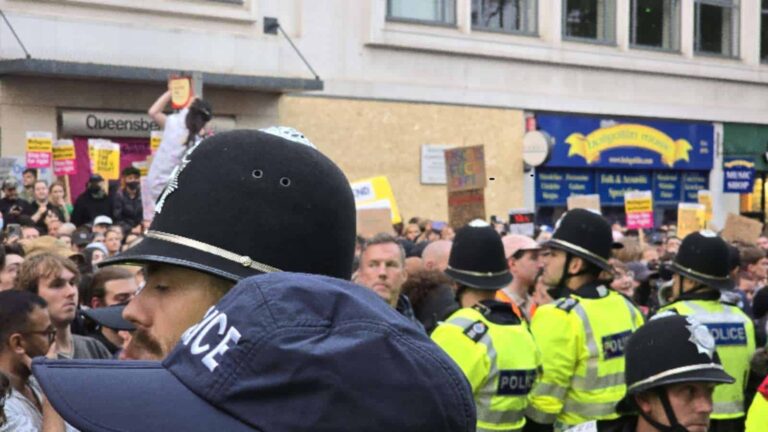

Simon Fawthrop, an Orpington councillor and magistrate, has been dismissed from his judicial position after publicly criticising a court ruling involving anti-ULEZ protesters. His remarks outside Westminster Magistrates’ Court have led to significant consequences.
Following the conviction of four protesters for harassing London Mayor Sadiq Khan, Fawthrop described the verdict as “inconsistent” and a “body-blow to free speech.” He criticised District Judge Daniel Sternberg’s impartiality and argued that the ruling contributed to a “two-tier justice system.” Fawthrop cited the acquittal of Greenpeace activists who scaled Prime Minister Rishi Sunak’s roof as a contrasting example.
The Judicial Conduct Investigations Office (JCIO) launched an investigation after a complaint was filed. The JCIO concluded that Fawthrop had “fundamentally misunderstood” his judicial responsibilities. He was reprimanded for failing to inform his bench chair about his role as a spokesperson for the protesters and for publicly attacking the judiciary while still identifying himself as a magistrate. The panel stated that his conduct “undermined public confidence in the judiciary and the criminal justice system.”
Although Fawthrop claimed the complaint was politically motivated and insisted his comments were made in his capacity as a councillor, he acknowledged mentioning his magistrate status during media interviews. He apologised for this “unintentional” disclosure.
Senior judicial figures, including Lady Chief Justice Baroness Sue Carr and Lord Chancellor David Lammy, supported the disciplinary panel’s decision. They confirmed that Fawthrop’s behaviour amounted to gross misconduct, officially ending his tenure as a magistrate.
This controversy followed the conviction of Nicholas Arlett, Martin Whitehead, Alison Young, and Lloyd Dunsford, who were found guilty of harassment after protesting near Sadiq Khan’s home in Tooting against the expansion of the Ultra Low Emission Zone (ULEZ).
Originally published by UKNIP.