
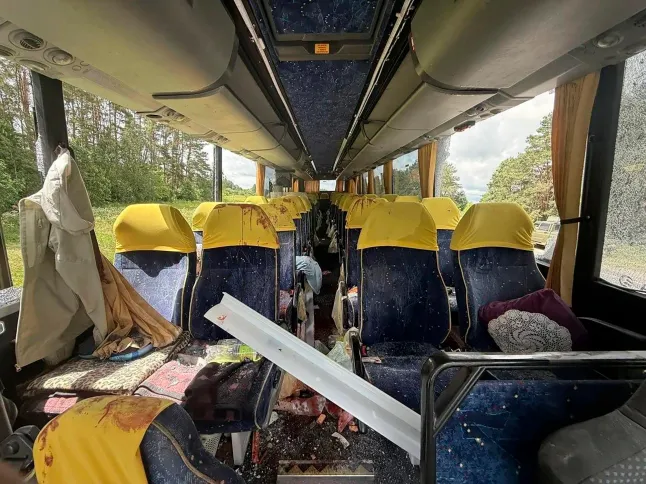
A drone strike targeted a bus carrying young footballers from Homiel, Belarus, to a holiday camp near Russia’s Gelendzhik on Wednesday, killing the team coach’s wife and injuring six players. Witnesses reported seeing a swarm of drones descending on the bus carrying 88 people, an attack that has heightened tensions and fears of Belarus being drawn further into the Russia-Ukraine conflict.
The fatal assault occurred while the team travelled through a conflict-sensitive area near the Ukrainian border. The wife of the Rechytsa Youth Sports School coach died in the strike, and six young footballers sustained injuries.
Belarusian President Aleksandr Lukashenko, who is balancing support for Vladimir Putin with efforts to maintain peace, demanded clarity on who ordered the drone strike. He warned, “If someone is provoking us and trying to drag us into the war, I think it will end badly for those who are trying to do this.” Lukashenko noted that the drone was reportedly of Ukrainian origin but may have been acquired by third parties. He emphasized that Belarus will establish the truth and urged children not to travel outside Belarus without permission.
In response to the incident, Russia opened a terror investigation blaming Ukraine, a claim Kyiv denied as Kremlin misinformation. Local officials criticised the private organisers for choosing a dangerous route near frontline zones. Analysts suggest the strike may be intended to strain relations between Minsk and Kyiv and justify increased Belarusian involvement in the war.
The UK Defence Journal reported that Vladimir Putin is pressuring Lukashenko to commit Belarusian troops to the conflict. Evidence indicates that Russia has been enhancing military infrastructure along the Belarus-Ukraine border to support operations. Moscow has also used Belarusian territory to conduct drone attacks on Ukraine.
The attack has shattered the illusion of peace for many Belarusians living near the border. Political experts warn that the conflict’s proximity will increase public awareness and tension within Belarus as authorities work to prevent panic.
Originally published by UKNIP.