
The England team heading into the World Cup 2026 brings a mix of hardened experience and youthful energy. Having reached the final at Euro 2020, the quarter-final at the Qatar World Cup, and the final at Euro 2024, this squad is shaped by the lessons and scars of major tournaments. These experiences either toughen a team or sharpen its edge. Now, under the guidance of Thomas Tuchel, England has a clearer tactical blueprint and a broader pool of players to select from.
Amid the usual summer buzz around football and betting markets, the focus remains simple: can England’s right side break the deadlock? Recent news about Bukayo Saka points to a winger regaining full form and confidence.
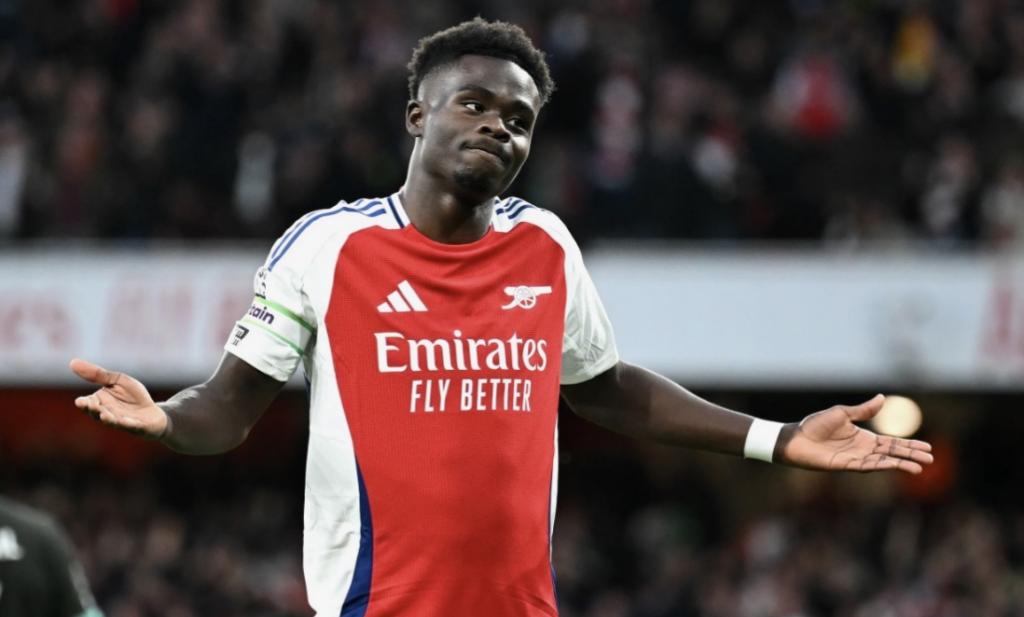
What stands out before the tournament is not hype but order. Arsenal confirmed that Saka’s 2024/25 season was disrupted by a hamstring injury sustained in December 2024. However, he made a swift recovery, scoring against Fulham just seven minutes after returning. This timeline is significant because it shows that Saka’s injury concerns are no longer theoretical; they have already tested his rhythm, yet he bounced back quickly.
Arsenal’s profile offers insight into Saka’s potential when fully fit. He was Arsenal’s top league scorer in the 2023/24 season with 16 goals, and he contributed 20 goals overall along with numerous assists. According to FIFA, he entered the World Cup 2026 after helping Arsenal secure the league title. This recent performance data carries more weight than mere sentiment, reflecting output under real pressure rather than highlight reels.
England’s situation further supports this view. The official roster confirms Saka as one of the 26 players selected by Tuchel for his second World Cup campaign. FIFA also highlights that under Tuchel’s management, England completed a record-breaking qualifying campaign, winning eight matches without conceding a goal. With such a strong defensive foundation, wingers like Saka will have clearer opportunities to attack.
For this England team, Saka’s value lies more in his versatility than just his ability. England Football notes that he can play as a fullback, wing back, or forward on either wing. Tuchel values versatility highly, having built successful teams by adapting formations to the strengths of his players. FIFA’s tactical analysis of Tuchel shows he often changes formations to maximise player strengths.
Saka’s style may also give England an edge in crucial matches because he does not need many touches to influence the game. He can dribble from the start, force full-backs to retreat, and create space for teammates. An interview conducted by FIFA reveals confidence in the dressing room, underscoring belief without theatrics. England’s ceiling rises as long as Saka’s output remains sharp.
The likely path to success for England involves control followed by quick acceleration rather than total domination. Tuchel prefers giving attackers room to operate behind forwards. With Harry Kane’s withdrawal and creative midfielders in place, the right wing is expected to be England’s biggest asset. Here, Saka could define the tournament—not by touching the ball fifty times, but by making a few decisive touches that change the shape of knockout matches.
However, Saka’s injury remains the biggest concern. Wide players who frequently run with the ball often face heavy challenges, double teams, and physical pressure. Saka has suffered at least one major hamstring injury in the past and missed time towards the end of the 2025/26 season. This injury risk is the clearest reason England’s hopes could falter. A half-fit Saka still contributes but loses the ability to intimidate elite full-backs.
Beyond the physical, Saka’s calmness under pressure is shaped by his background and personality. In a BBC interview, he revealed that both his parents were born in Nigeria. This identity is not just a detail but influences his composure, seriousness, and how he handles public expectations. Big tournaments often hinge on mental balance after setbacks, and Saka’s upbringing appears to equip him well.
His father was instrumental in guiding him to Arsenal, emphasizing the importance of having a solid plan B alongside football dreams. This blend of ambition and pragmatism defines Saka’s playing style, allowing him to remain composed on the big stage.
There is also a footballing angle to Saka’s ethnicity. Tournament stress may affect players raised in stable families differently, and previous England teams have often carried stress like a burden. Saka seems to carry it as part of his role. In conversations with FIFA, he described failures as fuel rather than burdens, which may explain England’s growing confidence.
What can Saka realistically achieve by the end of the tournament? At minimum, he will be one of England’s top attacking players and feature in every key game. At best, if the draw is favourable, the midfield functions smoothly, and Kane continues providing service, Saka could become England’s most influential outfield player.
The path to defeat is clear as well. If Saka’s injury issues resurface, England loses pace, width, and one of their cleanest one-on-one threats. If opponents successfully contain him, England’s play may become too centralised and predictable. But with health on his side, the team’s experience, success, and Tuchel’s tactical understanding create a promising environment.
Given these factors, Bukayo Saka has the potential not only to excel but to become the kind of attacker who makes England truly dangerous at the World Cup 2026.
Originally published by UKNIP.